
The cost of ignoring a wet basement is rarely a bigger version of the same repair. A crack that leaks this spring usually needs the same injection next spring. What waiting adds is everything around the water: the drywall and carpet it soaks, the mould that follows within days, an insurance claim that probably will not pay, and, for one kind of crack, a wall that keeps moving. Those are the line items to count before deciding to leave it.
The leak itself mostly holds its price
A leaking shrinkage crack in a poured wall is sealed by injection from the inside, with no digging, and that is what Barrie foundation crack repair is for most houses. A cove joint that seeps after the thaw is the same job whether you fix it now or the year after next. Waiting a season to see whether a dry crack moves is a sensible use of time, not a cost.
The answer to “will it get worse?” is that the leak itself often stays the same size. Everything near the leak changes.
What waiting adds, in the order it tends to arrive
| What the water reaches | What it adds to the job | When to act |
|---|---|---|
| Bare concrete floor and wall | Nothing yet, apart from humidity | Find the entry point while it is wet |
| Cardboard boxes, rugs, stored furniture | Contents to throw away | Same day |
| Carpet and underpad | Removal and replacement | Health Canada says to throw wet carpet away |
| Drywall and the framing behind it | Cutting out and replacing the bottom of the wall | Before mould sets in |
| Mould spreading past a few patches | Professional assessment and cleanup | Once a single patch passes 3 m2 |
| A wall that is moving inward | Reinforcement or excavation instead of injection | Now |
The first two rows cost almost nothing. The jump happens when water meets anything porous, which is why a finished basement and an unfinished one are two different decisions.
Mould runs on a short clock
Health Canada’s guide to moisture and mould at home is plain about timing: mould can begin to grow within 48 hours. In a basement, one wet weekend can be enough.
The same guide sorts the cleanup by size. An area of mould counts as small if it covers one square metre or less, and the guide says a professional is generally not required for that if the proper procedures are followed and the right protective equipment is used. It also says that if ignored, small areas of mould may become larger over time. That sentence is the cost of ignoring a wet basement in miniature. A single patch larger than 3 m2 is large, and Health Canada recommends that a qualified professional assess and clean it up. If the mould is underneath the paint, the drywall has to be removed and replaced. Those are the steps where a leak you could have sealed in an afternoon starts to involve a second trade.
Carpet is simpler. The guide says to throw away carpets and other soft furnishings that have gotten wet or been stored in a wet environment, and it suggests considering removing carpet from the basement floor altogether.
The insurance question to settle before you wait
Many homeowners plan to “put it through insurance” if the leak gets worse. Check before you rely on that.
The Insurance Bureau of Canada says groundwater and seepage coverage is typically not standard on home policies, and that some insurers offer both as optional endorsements, sold individually or as a bundle for an additional cost. A slow leak through a foundation crack is seepage. If your policy does not name it, assume the drywall, the carpet and the mould cleanup are yours to pay.
Sewer backup is a separate coverage and a separate repair. Water pushed up from the sanitary sewer through the floor drain is not the same problem as water at the base of the wall, and the guide to sewer backup vs groundwater in a basement shows how to tell them apart before you call either your insurer or a contractor.
The one crack not to wait on
There is one case where delay does change the repair itself. A horizontal crack across the middle of a wall, a stair-step crack through block mortar, or any crack where one face sits proud of the other means the wall is moving, not just leaking. Soil pressure from saturated clay or from frost is what pushes it, and that pressure is the mechanism behind the Barrie clay soil foundation problems that show up as a bowing wall. A wall that is bowing inward does not straighten on its own, and the repair stops being injection. It becomes carbon fibre straps, an engineer’s report, or digging out the wall from the outside.
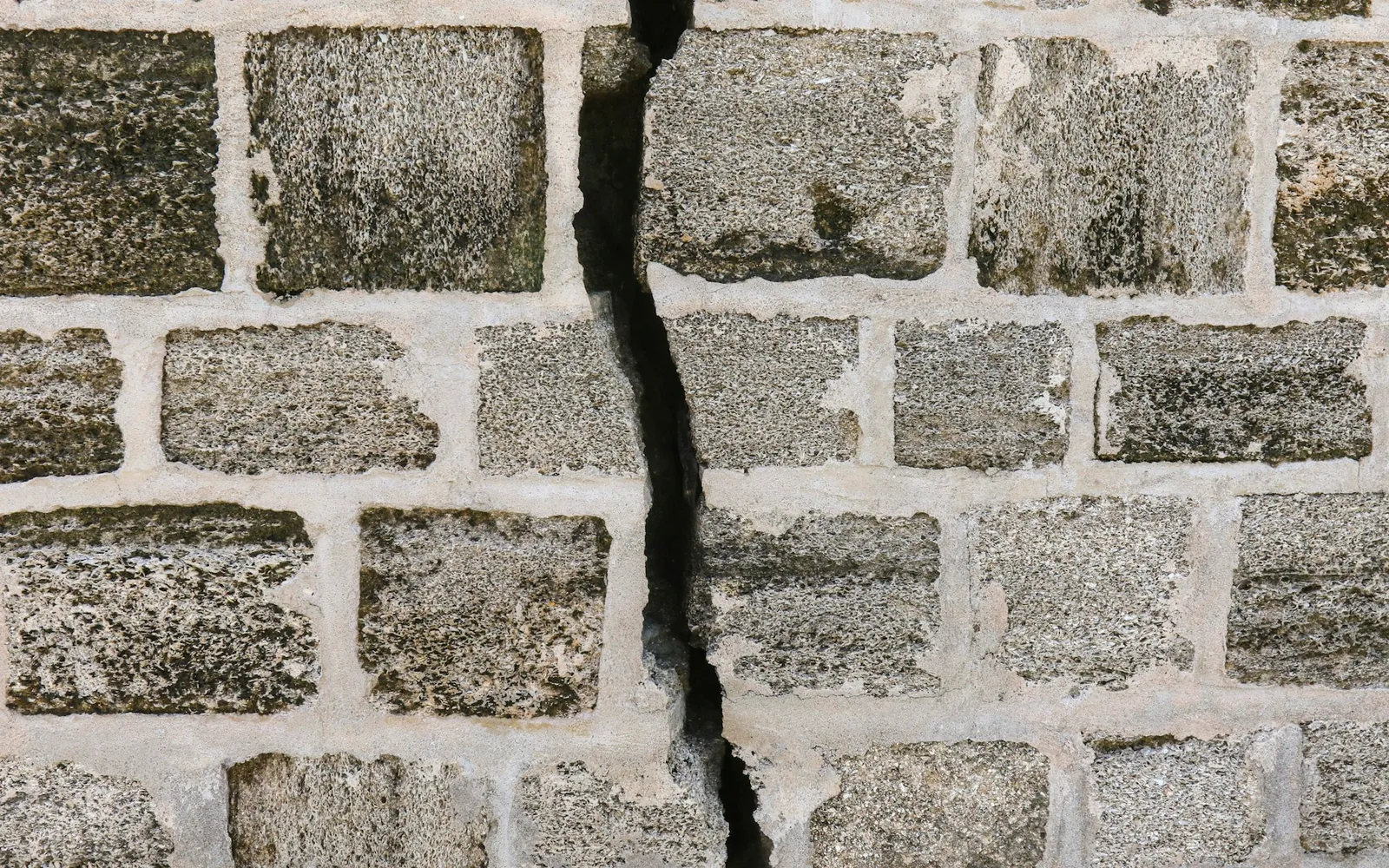
If you see one of those, do not wait to see what next spring does. Every other crack can be marked, dated and watched.
What to do this week instead of nothing
None of this needs a contractor to start. These are the cheap steps that stop the cost list from growing while you decide.
- Find where the water comes in while it is still wet. Photograph the wet edge, the staining and any crack with a ruler in frame. The puddle marks the low spot on the floor, which is often some distance from the gap that let the water in.
- Get porous things off the floor. Health Canada advises never placing cardboard boxes directly on a basement floor. Plastic bins with lids are the alternative it names.
- Run a dehumidifier. The same guide suggests one in damp areas such as basements, and where relative humidity is above 50%.
- Pull wet carpet back from the walls so the floor and the bottom of the drywall can dry.
- Read your policy for the words “groundwater” and “seepage”.
- Walk the outside. Downspouts that empty beside the wall, lot grading that has settled toward the house, and window wells with no drain are the cheapest fixes on the list, so rule them out first. The guide to basement leak repair in Barrie works through them in order.
When to call
If the water is at one crack in a poured wall and nothing finished is getting wet, you have time to do the steps above and book Barrie foundation crack repair when it suits you. If drywall or carpet is already wet, the 48 hour clock is the deadline, not the leak. If the crack is horizontal or the wall has moved, call this week.
Whichever it is, send the photos and your answers with a basement waterproofing quote request for Barrie, so the visit starts from where the water comes in rather than from a price list.